
 PintereAI





新作|慢珊瑚设计 大司巷新生:再造街巷之家 首
2025-11-27 09:19


破壁新生:
如何唤醒一处被遗忘的封闭角落,
将其重塑为街巷中有温度的呼吸之家?
Breaking the Wall, Breathing Anew:
How do you awaken a forgotten, enclosed corner
and transform it into a warm, breathing home within the streets and alleys?


改造前,这里如同街区中被遗忘的角落:受限的开窗与外部遮挡光线的木格栅共同导致室内封闭压抑。在大司巷这样承载深厚记忆的历史街区,这一空间的长期闲置与访客罕至,不仅是使用功能的缺失,更意味着一段城市记忆的悄然中断。基于此,希望通过彻底的空间再造,将其重塑为一个融合文化交流、在地体验与休闲社交的多元场所,使之重新成为凝聚社区情感与城市记忆的活力聚集地。
Before the renovation, this place felt like a forgotten corner of the district: limited windows and an exterior wood grille that blocked daylight left the interior closed-off and oppressive. In a historic area like Dasi Lane—rich with layered memories—the long-term abandonment of this space, and the absence of visitors, signaled more than a lack of function; it marked a quiet rupture in the continuity of urban memory. With this in mind, the redesign aims to fully reimagine the space, transforming it into a versatile venue that blends cultural exchange, local experiences, and leisurely social gatherings—reviving it as a vibrant hub that reconnects community sentiment and urban memory.


设计完整保留了原有建筑的坡屋顶构架,让历史的轮廓在空间中清晰生长。混凝土的质朴与木材的温润形成新旧对话,地面延伸的小青砖则延续了街巷的历史肌理。片状光源结合深色金属构件悬垂于吧台上方,与木质结构形成轻盈的对比;立面镶嵌的圆形灯箱则如一轮明月,以恒定的光芒温柔地笼罩着空间。对光线与材质的把控既延续了场所的历史文脉,又为空间注入了当代的感知维度。
The design preserves the original pitched-roof structure, allowing the building’s historic outline to grow clearly within the space. The raw texture of concrete and the warmth of wood form a dialogue between old and new, while the continuation of traditional bluish bricks across the floor extends the historic grain of the surrounding lanes. Sheet-like light fixtures paired with dark metal components hang lightly above the bar, creating a subtle contrast with the wooden structure; the circular lightbox embedded in the façade glows like a full moon, gently enveloping the space with its steady light. Through careful control of lighting and materials, the design not only carries forward the site’s historical context but also infuses the space with a contemporary sensory dimension.

吧台被策略性地设定为空间叙事的起点。通过深色体块、金属线条与天然石材的并置,塑造出一种具有凝聚力的沉静基调。这里不仅是功能性的服务核心,更是一处细腻的情感容器
——
材质与光影在此交织,引导体验者放缓脚步,逐渐融入空间的节奏。
The bar is intentionally positioned as the starting point of the spatial narrative. Through the juxtaposition of dark volumes, metal lines, and natural stone, it establishes a calm, cohesive atmosphere. More than a functional service core, it serves as a subtle vessel of emotion—where materials and light interweave, inviting visitors to slow down and gradually attune themselves to the rhythm of the space.


中央岛台上,主理人甄选的私藏好物静默陈列。从文创到手作,器物皆为其生活品位的延伸。这些承载故事的微小存在,不仅丰富了空间的叙事维度,更将生活美学化为可触可感的真实体验,悄然完成文化的传递与场所精神的塑造。
On the island counter, the owner’s carefully curated personal selections are quietly displayed. Ranging from artisanal pieces to creative goods, each object is an extension of their taste in everyday life. These small, story-laden items not only enrich the narrative layers of the space but also transform life aesthetics into a tangible, sensory experience—subtly conveying culture and shaping the spirit of the place.

立于中庭回望,一幅融汇当代生活与历史意境的画卷在眼前铺陈。挑檐之下,木格窗框将吧台区域的座椅巧妙分割,恰似传统园林的漏窗借景。人们倚窗而坐的身影被框成一幅幅生动的画面,令人联想到往昔在屋檐下闲话家常的温馨场景,空间语言构建起此地独有的时空对话。
Standing in the atrium and looking back, a scene that weaves together contemporary life and historical sentiment unfolds before your eyes. Beneath the overhanging eaves, the wooden lattice windows subtly frame and divide the seating around the bar area, much like the borrowed views of traditional garden “leak windows.” The silhouettes of people sitting by the window become vivid framed pictures, evoking the familiar warmth of past days when neighbors chatted leisurely under the eaves. Through this spatial language, a unique dialogue across time is gently established.

“破壁”:
打开中庭采光井,引入天光、风雨与四季
“造巷”:
将单一方盒,转化为巷道交织的游园合院
“Breaking the wall” : opening the atrium skylight to welcome daylight, wind, rain, and the changing seasons.
“Making lanes” :transforming a single box into a garden-like courtyard woven with interlacing alleyways.

遵循原建筑“回”字形格局,设计以当代语言重构原始空间脉络。我们围绕中庭植入四条环廊“街巷”,既是对传统合院肌理的现代转译,也是对街巷生活容器的空间再现。巷道不仅是通行路径,更是相遇、交谈与停留的场所。四条围合动线在延续传统交流尺度的同时,为日常使用注入舒适距离,既延续了场所记忆,又激活了社区生活的当代体验。
Following the original “hui-shaped” layout, the design reconstructs the spatial logic with a contemporary language. Around the central atrium, we introduce four corridor-like “lanes,” offering a modern reinterpretation of traditional courtyard patterns and reviving the essence of street-lane life. These lanes are not merely circulation paths—they are places for encounters, conversations, and pauses. While the four interwoven routes maintain the intimate scale of traditional social spaces, they also provide a comfortable distance suited to everyday use, preserving the site’s memory while activating a contemporary sense of community life.

无论身处空间的哪个角落,视线总能穿越廊道与中庭产生连接。这种向心性的布局不仅优化了空间流线,更在无形中促进了人与人之间的互动。坐在不同巷道的人们可以通过中庭产生视觉交流,正在进行的活动之间形成自然的相互关注。巷道在这里不仅是连接空间的路径,更是串联情感的纽带,重现了传统街巷中那种亲密又自在的邻里关系,让每个角落都充满着被发现的可能性。
No matter where one is within the space, the sightline always reconnects through the corridors and the central atrium. This centripetal layout not only optimizes circulation, but also subtly encourages interaction among people. Users seated along different “lanes” can engage in visual connection across the atrium, allowing ongoing activities to naturally acknowledge one another. Here, the lanes are not just paths that link spaces; they are emotional connectors that rekindle the intimate and effortless neighborhood relationships once found in traditional alleyways, filling every corner with the possibility of encounter and discovery.


在四条巷道交织的游园动线中,我们通过“无序”的家具布局,赋予空间高度的可塑性。窗边矮榻、转角卡座与散置单椅,以非预设的方式邀请使用者自主探索与定义。这种策略打破了商业空间的固化模式,以“场景自治”重塑如家般松弛、如街巷般充满偶遇感的自在体验。
Within the garden-like circulation formed by the four interwoven lanes, we introduce an “unstructured” furniture layout that gives the space a high degree of adaptability. Low benches by the windows, corner booths, and casually placed single chairs invite users to explore and define the space on their own terms. This approach breaks away from the fixed patterns typical of commercial interiors, creating a sense of “scene autonomy” that reshapes the experience into something as relaxed as home and as filled with serendipity as strolling through neighborhood streets.

通过灵活的布局,使空间能有机地适应不同时段与场景的需求——从清晨的独处、午后的社交到傍晚的公共沙龙。这种“场景自治”让各类客群都能找到属于自己的角落,其丰富的可能性也吸引人们持续探索,在不断创造新记忆的同时,也保持了场所持久的吸引力与生命力。
Through a flexible layout, the space organically adapts to different times of day and various modes of use—from solitary moments in the morning, to social gatherings in the afternoon, to public salons in the evening. This “scene autonomy” allows every type of visitor to find a corner that feels personally theirs. Its abundant possibilities invite people to return again and again, continually creating new memories while sustaining the place’s long-lasting appeal and vitality.


开井引光,以自然为媒介
造巷游园,以街巷为脉络
Opening the skylight to bring in light, using nature as the medium
Creating lanes and gardens, with streets and alleys as the framework

通过打开中庭采光井,我们引入了“天光、风雨、时序” 作为设计的核心媒介。下沉庭院不仅创造了视觉错落,更将人的感官与自然重新连接,使这里成为一个能“听见雨声”的静心之所,实现了从封闭空间到呼吸合院的本质转变。
By opening the atrium skylight, we introduce daylight, wind, rain, and the passage of time as the core mediums of the design. The sunken courtyard not only creates a visual sense of depth but also reconnects the human senses with nature, transforming the space into a serene place where one can hear the sound of rain. This shift represents a fundamental transformation from a closed-off environment to a breathable, living courtyard.


建筑面向中庭采用通透玻璃界面,消融内外边界,将阳光、气流与雨水转化为空间的动态语言。晴时光影游移,雨际水帘轻悬,声景交织营造沉浸式自然体验。设计既弥补了原建筑采光不足,更将自然时序纳入日常,使空间伴随四季流转,展现出一幅永恒变幻的生动场景。
The building’s facade facing the atrium is made of transparent glass, dissolving the boundary between inside and outside and transforming sunlight, airflow, and rain into dynamic elements of the space’s language. On sunny days, shifting shadows dance across the interior, while on rainy days, the water curtain gently hangs, with sound and scenery intertwining to create an immersive natural experience. The design not only compensates for the original buildings lack of natural light but also incorporates the rhythm of nature into daily life, allowing the space to flow with the changing seasons and presenting a vivid scene that eternally evolves.


室内延续着木材的温暖基调,保留修复后的木格栅窗成为空间与光的媒介。当日光透过格栅筛落,与暖色内嵌光源温柔交织,于墙面共绘出一幅流动的光影画卷。这由材质与光线共筑的包容性场域,以其静谧而开放的气质,将空间升华为一座迎接所有体验者的精神栖所。
The interior continues the warm tone of wood, with the restored wooden lattice windows serving as a mediator between the space and light. As daylight filters through the lattice, it gently intertwines with the warm embedded light sources, casting a flowing dance of light and shadow on the walls. This inclusive space, built by both materials and light, elevates the atmosphere with its tranquil yet open character, transforming the space into a spiritual sanctuary that welcomes all who enter.


空间各处点缀着主理人精心选配的绿植,它们随季节悄然生长、更迭,赋予空间以自然的呼吸感。这种随时间流转的节奏,让每一次到访都充满新鲜与期待。植物不仅是空间中最富生命力的装饰,更成为连接人与人、人与场所的温柔媒介。
Throughout the space, carefully chosen plants by the owner are thoughtfully scattered, quietly growing and changing with the seasons, infusing the space with a natural sense of breath. This rhythm of time makes each visit feel fresh and full of anticipation. The plants are not only the most vibrant decorations in the space but also serve as a gentle medium, connecting people to each other and to the place itself.


通过打开中庭、重构流线,将封闭单体转化为围绕下沉庭院的游园式合院。四条巷道交织延伸,模糊内外边界,重塑街巷记忆。材质、光影与流线的转译,使空间从孤立商业场所蜕变为城市肌理中的活性节点。这里延续着街坊的温情与故事,为社区提供一个如家般安定、充满归属感的日常场所。
By opening the central atrium and reorganizing the circulation, the once-enclosed volume is transformed into a garden-like courtyard surrounding a sunken patio. Four interwoven lanes extend through the space, softening the boundary between inside and outside and rekindling the memory of historic streets and alleys. Through the reinterpretation of materials, light, and movement, the space evolves from an isolated commercial unit into an active node within the urban fabric. Here, the warmth and stories of the neighborhood continue, offering the community a daily place that feels as grounded and familiar as home.


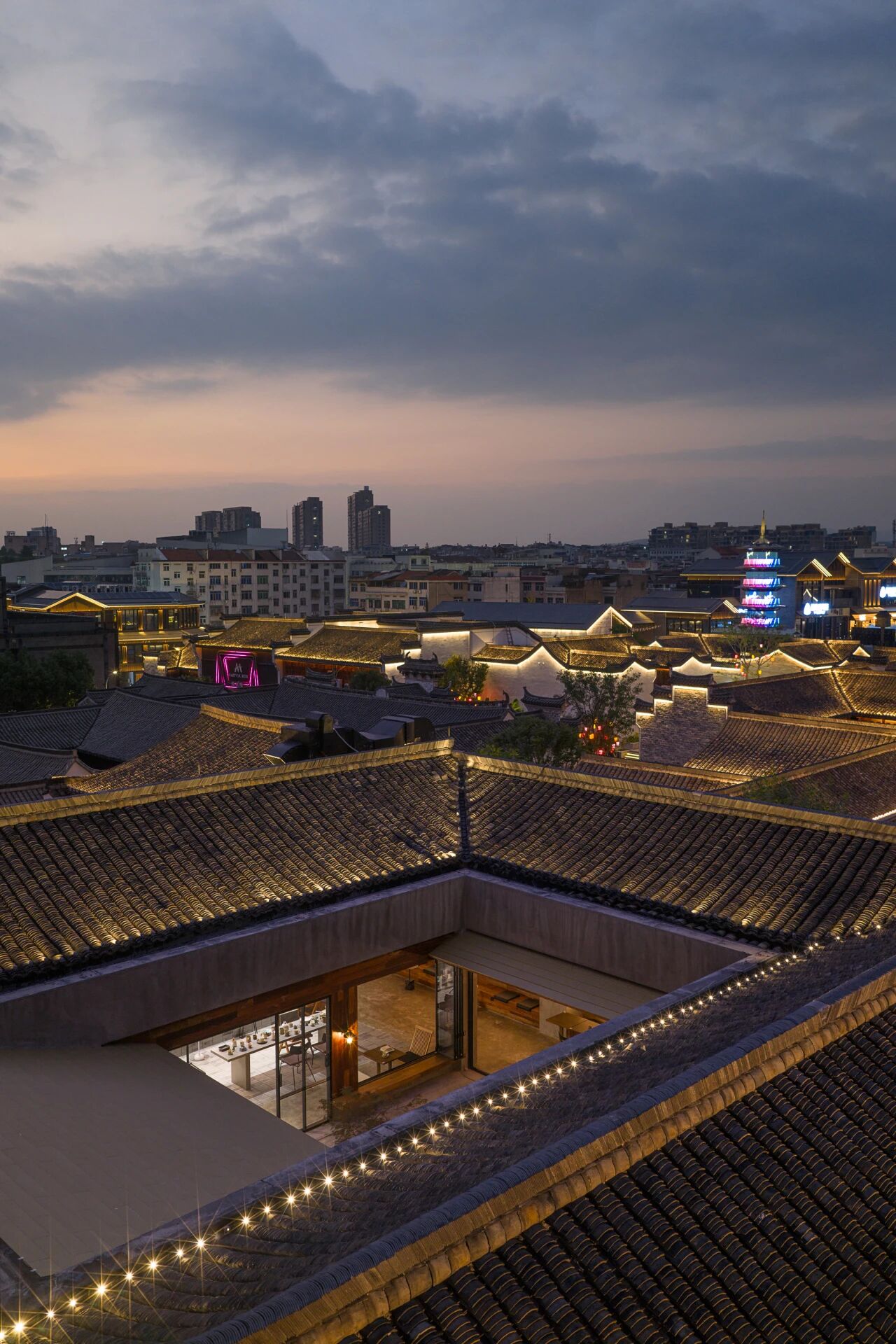
包厢完整保留了原始人字屋顶与木格栅窗的历史肌理,在开放与私密间建立精妙平衡,围合出一方独享的静谧天地。置身其间,历史街区的连绵屋瓦与城市现代轮廓透过木格栅窗渐次展开,构成一幅时空交织的立体画卷,生动见证着街区的持续演进与有机更新。
The private room preserves the original gable roof and wooden lattice windows, maintaining the historic texture of the space. It strikes a delicate balance between openness and intimacy, creating a secluded and tranquil sanctuary. Within this space, the continuous rooftops of the historic district and the modern urban skyline unfold gradually through the wooden lattice windows, forming a three-dimensional picture that weaves together time and space. It vividly witnesses the ongoing evolution and organic renewal of the neighborhood.

在正式开业前,这处空间便以其独特魅力吸引众多年轻人自发探访。项目并非对历史的简单复刻,而是以当代设计语言重构传统家巷空间,使其重获新生。如同为街区注入新鲜血液,这些被唤醒的空间正为历史街区带来持续活力。作为集咖啡馆、文化沙龙与社区客厅于一体的复合场所,它以多重身份召唤年轻人回归老街,为工业城市增添人文温度,让历史街区在当代城市发展中找到全新定位,续写属于这个时代的生活叙事。
Before its official opening, this space had already attracted many young visitors with its unique charm. The project is not a simple reproduction of history, but rather a reimagining of the traditional home lane space through contemporary design language, breathing new life into it. Like injecting fresh blood into the district, these revived spaces bring ongoing vitality to the historic area. As a multifunctional venue that combines a café, cultural salon, and community living room, it calls young people back to the old streets. It adds a human touch to the industrial city, allowing the historic district to find a new role in the development of the contemporary city, continuing the narrative of life for this era.

大司巷新生:再造街巷之家
项目地点:浙江省金华市永康
项目类型:商业
建筑面积:480㎡
设计全案:慢珊瑚设计
完工时间:2025.10
项目摄影:瀚墨视觉麻壹高
Dasi Lane Reborn: Reimagining the Home of Streets and Alleys
Project location: Yongkang, Jinhua, Zhejiang Province
Project Type: Commercial
Building area: 480㎡
Design proposal: Slow Coral Design
Completion time : 2025.10
Project short film and photography: Hanmo Visual Ma Yi Gao



推荐作品


相关文章
-
2018年走过了四分之一,LOGO设计趋势也清晰了LOGO设计
-
2018年走过了四分之一,LOGO设计趋势也清晰了LOGO设计
-
2018年走过了四分之一,LOGO设计趋势也清晰了LOGO设计